
"I solemnly swear that I am up to no good"
Introduction
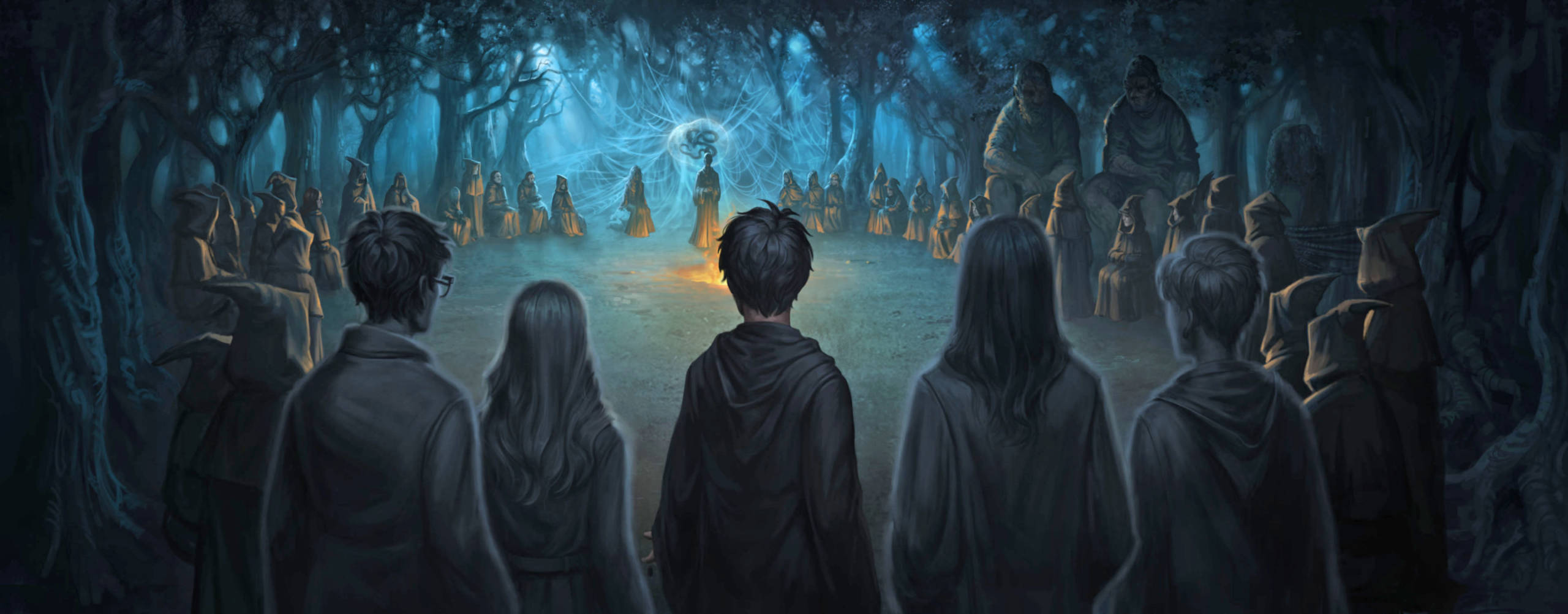
The enchanting world of Harry Potter continues to captivate readers and viewers alike with its intricate spells, fantastical creatures, and complex magical lore. Among the many riddles woven into the fabric of the series, one of the most enduring mysteries is the inexplicable survival of the young wizard in the Forbidden Forest. In this exploration, we embark on a journey to uncover the layers of magical enchantments, the power of love, the intricacies of blood magic, and the unforeseen twists that contributed to Harry Potter's triumphant escape from the clutches of death.
Master of Death Theory
The "Master of Death" theory in the Harry Potter fandom suggests that Harry's possession of the Deathly Hallows—the Elder Wand, the Resurrection Stone, and the Invisibility Cloak—rendered him immune to the Killing Curse, explaining his survival in the Forbidden Forest. However, this theory doesn't align with the series' established magical rules. While the Hallows carry symbolic themes about mortality, Harry's survival is intricately tied to his mother Lily's protective sacrifice and the blood magic inadvertently initiated by Voldemort using Harry's blood.
Lily's Sacrifice: The Power of Love and Protection
At the heart of this enigma lies a mother's love, transcending even the darkest of magics. When Lily Potter willingly sacrificed herself to save her infant son from Voldemort's wrath, she triggered an ancient form of magic. Her love for Harry acted as a powerful protective charm, rebounding the Killing Curse upon its caster. This created a magical barrier safeguarding Harry from harm.
Lily's sacrifice was not a fleeting moment of heroism; it established an intricate web of magical safeguards. The spell that resulted from her sacrifice was closely tied to bloodlines and family connections. Harry's placement with the Dursleys, his only remaining blood relatives, was no mere coincidence. As long as he called their home his own and considered it his refuge, the magical protection persisted. This enchantment was fated to endure until Harry reached the age of seventeen or severed his connection with the Dursleys' dwelling.
Voldemort's Use of Harry's Blood
Voldemort's decision to use Harry's blood was driven by his quest for power and a desire to overcome the protection that had thwarted him before. In "Harry Potter and the Goblet of Fire," Voldemort sought to regain his physical form and full magical strength. However, the remnants of Lily Potter's protective enchantment, fueled by her sacrificial love, had kept him from completely dominating the wizarding world. By incorporating Harry's blood into the resurrection potion, Voldemort unintentionally created a loophole in the protective magic.
Voldemort believed that using Harry's blood would serve to strengthen the potion and make him invulnerable to Harry's innate protection. He thought that by using Harry's blood, he would gain mastery over the protective charm, allowing him to finally defeat Harry and any remaining obstacles.
Leaving the Dursleys
The eve of Harry's seventeenth birthday marked a significant turning point. Recognizing the need to emancipate himself from the protection conferred by Lily's sacrifice, Harry left the Dursleys' home. This strategic decision, while tinged with a sense of nostalgia and longing, was a vital step toward dismantling the barriers that had both shielded and confined him. As he embarked on the path to independence, the magical shackles of familial protection began to loosen.
Dumbledore's Revelation: Connecting the Dots
As Dumbledore delved into the mysteries surrounding
Voldemort's return and Harry's unique connection, he realized the
significance of Voldemort's decision to use Harry's blood in the
resurrection potion. Dumbledore understood that by using Harry's blood,
Voldemort inadvertently kept a fragment of Lily Potter's protective
magic alive within himself. This connection, while not something
Voldemort intended, had the profound effect of sustaining the protective
enchantment that Lily's sacrifice had originally created. As long as
Voldemort carried Harry's blood within him, the bond between them
maintained a thread of the protective charm, preventing Voldemort from
harming Harry with the Killing Curse.
In his pursuit of power, Voldemort employed a ritual that unknowingly established an unforeseen link between himself and Harry. By using Harry's blood as a vital ingredient in the resurrection potion, Voldemort unintentionally perpetuated the magical connection to Lily's protective charm. The shared blood, both a blessing and a curse, became a conduit for life, magic, and destiny.
The series has inspired a multitude of fan theories, each offering unique interpretations of the events within the wizarding world. The "owner of the Elder Wand" theory and the "Horcrux taking the bullet" theory are just two examples of how fans engage with the story and characters, exploring alternative explanations for Harry's survival in the Forbidden Forest.
The Owner of the Elder Wand Theory:
This theory suggests that Harry's mastery of the Elder Wand, acquired when he disarmed Draco Malfoy, gave him protection against the Killing Curse. According to this interpretation, the Elder Wand's loyalty to Harry would prevent it from allowing him to be harmed, and thus the curse would fail to kill him.
The Horcrux Taking the Bullet Theory:
In this theory, fans speculate that the Horcrux fragment of Voldemort's soul within Harry absorbed the impact of the Killing Curse, shielding Harry from its effects. This idea proposes that the Horcrux essentially sacrificed itself to save Harry's life.
Conclusion
While they provide interesting alternative perspectives, it's important to note that J.K. Rowling has provided her own explanations within the series for Harry's survival. In the heart of the Forbidden Forest's enigma, Lily Potter's love emerges as an unwavering force that defied even the most sinister magic. It was her motherly sacrifice that initially cast a protective shield over Harry, making him impervious to the Killing Curse. This powerful shield, woven from love, stood as an invisible armor that preserved him through the darkest trials. Furthermore, Voldemort's use of Harry's blood unknowingly fortified this protective magic. The connection established by that shared blood became a thread that tied Harry's fate with Voldemort's. This connection, stretching beyond the confines of the Dursleys' home, ensured that Lily's love and protection remained, even as Harry left that dwelling behind. The protection of Lily's sacrifice, her blood magic, and the unintended connection forged through Voldemort's use of Harry's blood collectively form the canonical reasons for Harry's escape from the Killing Curse.
"mischief managed!"


0 Comments